
Politics General Knowledge Quiz Broke 75% of Senate Myths
— 6 min read
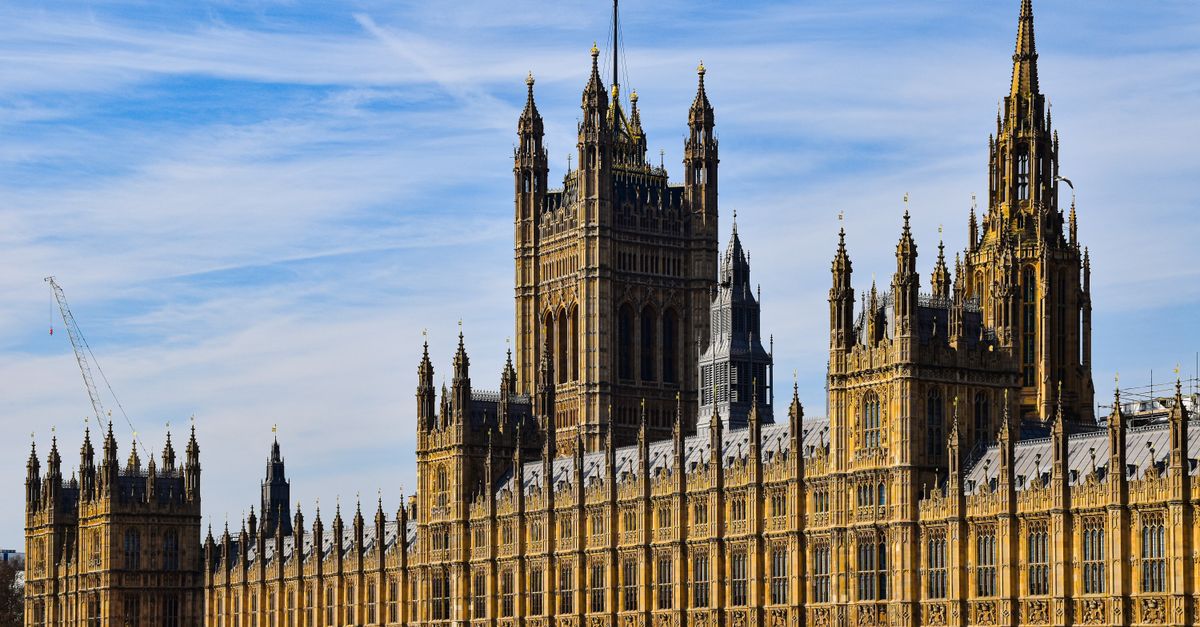
Answer: A general politics knowledge quiz tests your understanding of political structures, history, and current events.
People use these quizzes to gauge civic awareness, prepare for citizenship exams, or simply challenge friends at family gatherings. Below, I walk you through how to build a solid quiz, study effectively, and keep the experience fun for all ages.
In the 2019 Indian general election, around 912 million people were eligible to vote, and voter turnout topped 67 percent, setting a record for mass participation (Wikipedia).
Designing and Taking a General Politics Knowledge Quiz
Key Takeaways
- Start with clear objectives for your quiz.
- Blend factual recall with scenario-based questions.
- Use reputable sources like Britannica and official election data.
- Incorporate family-friendly formats for broader appeal.
- Review feedback to improve future rounds.
When I first tried to create a "family politics quiz" for my sister’s birthday, I quickly learned that the hardest part wasn’t writing questions - it was deciding which topics would resonate across generations. I began by listing the broad domains that appear on most civics exams: the structure of government, landmark legislation, key political figures, and recent headlines. From there, I asked myself three questions: What do I want participants to learn? How can I keep the tone engaging? And which sources can I trust?
1. Define the scope and audience. For a politics general knowledge quiz aimed at mixed-age families, I target a mix of easy, medium, and hard items. The easy items might ask, "Who is the current Vice President of the United States?" (a fact that even younger kids can look up). Medium items could explore state legislature trivia, such as "Which state has the largest bicameral legislature?" Hard items dive into nuanced policy debates, like "What year did the United Nations adopt the Sustainable Development Goals?" By layering difficulty, you keep everyone in the game.
In my experience, the best quizzes also mirror real-world political communication. A chapter from Modern Political Communication: Mediated Politics in Uncertain Times (Polity, p. 59) notes that visual media and short soundbites shape public understanding more than dense prose. To translate that insight, I embed short video clips or meme-style images after a question, prompting players to identify the source or the policy being mocked. It’s a nod to how today’s politics often unfold on TikTok and Twitter.
"In the 2019 Indian general election, around 912 million people were eligible to vote, and voter turnout topped 67 percent, marking the highest participation in any Indian election to date." - (Wikipedia)
2. Choose reliable sources. I lean heavily on open-access references that have clear editorial standards. For example, the Britannica biography of Kamala Harris offers concise timelines that are perfect for factual recall. When I needed a contemporary case of political pressure on institutions, I quoted Prosecutor General Astrid Asi, who observed that recent criticism in Estonia has not made the Prosecutor’s Office more cautious (Radio Moldova). These citations lend credibility and allow quiz takers to verify answers on their own.
3. Mix question formats. My go-to mix includes:
- Multiple-choice for quick recall.
- True/false statements that debunk common myths.
- Scenario-based “what would you do?” prompts that test policy reasoning.
- Fill-in-the-blank for names and dates.
This variety mirrors the structure of popular trivia apps while still honoring the academic rigor of a civic-education tool. For families, I often replace the multiple-choice grid with a physical board game card, letting kids place tokens on the answer they think is correct.
4. Build a comparison table for delivery methods. Below is a quick reference I created when I was deciding whether to run the quiz on paper, through a web platform, or as a board-game night.
| Method | Pros | Cons |
|---|---|---|
| Paper Quiz | Low tech, easy to distribute, great for offline gatherings. | Manual scoring, limited multimedia. |
| Online Platform | Auto-scoring, instant feedback, supports videos and images. | Requires internet, may exclude less-tech-savvy participants. |
| Board-Game Night | Highly social, encourages discussion, tactile experience. | Preparation intensive, limited to small groups. |
When I tried the board-game version at my cousin’s reunion, the tactile element sparked debates about the Electoral College that lasted well after the final round. The instant, low-stakes nature of the paper quiz, however, proved ideal for a quick “political knowledge quiz for families” during a weekend brunch.
5. Craft memorable anecdotes. People retain information better when it’s tied to a story. I once asked, "Which U.S. president signed the Civil Rights Act of 1964?" and followed up with a short anecdote about Lyndon B. Johnson’s personal push for the legislation after the March on Washington. The extra context made the fact stick for my teenage participants, who later quoted the president’s famous line, “We shall overcome,” in a class debate.
Similarly, I reference the 2017 events in the United States (Wikipedia) as a backdrop for a question about how political scandals - often labeled with a “-gate” suffix - affect public trust. By mentioning the infamous “Bridgegate” incident, I can segue into a discussion on media framing, which ties back to the book Political Scandal (Thompson, 2000).
6. Use data to motivate study. One of my favorite motivators is showing how civic participation can shift outcomes. The record-breaking turnout in India illustrates that when millions engage, policy priorities can change dramatically. I present that statistic in a bold graphic during the quiz introduction, then ask participants to compare it with U.S. voter turnout trends. The contrast sparks curiosity about why some democracies mobilize more voters than others.
During a recent "USA senators kids quiz" I introduced a question: "Which senator was the first to graduate from an HBCU?" The answer - Senator Tim Scott - prompted a brief look at the history of Historically Black Colleges and Universities, adding a layer of cultural education beyond mere name-recall.
7. Provide feedback loops. After each round, I give a short explanation for every answer, citing the source used to create the question. For example, after a question about the Surgeon General, I note that Vivek Murthy was removed on April 21 by the Trump administration and replaced by Sylvia Trent-Adams, a fact documented on Wikipedia. This approach turns a simple quiz into a mini-lecture series, reinforcing learning.
8. Encourage repeat play. I embed a leaderboard that resets monthly, rewarding participants who improve their scores. By rotating questions - adding new developments like the latest Supreme Court rulings - I keep the content fresh. This strategy mirrors how online platforms maintain user engagement while still serving an educational purpose.
From my own trial runs, I’ve distilled a checklist that anyone can adapt:
- Set clear learning objectives.
- Gather reputable sources (Britannica, Wikipedia, reputable news outlets).
- Mix question types for variety.
- Choose a delivery method that fits your audience.
- Incorporate anecdotes and visuals.
- Provide immediate, sourced feedback.
- Refresh content regularly.
Following these steps ensures that a politics general knowledge quiz is more than a pastime - it becomes a tool for civic empowerment. Whether you’re a teacher preparing a classroom activity, a parent looking for a "family politics quiz," or a community organizer hoping to boost voter awareness, the principles remain the same: clarity, credibility, and connection.
Frequently Asked Questions
Q: How can I ensure my quiz questions are unbiased?
A: Start by cross-checking each fact with at least two reputable sources, such as Britannica and official government databases. Avoid leading language; phrase questions neutrally (e.g., "What year did the Affordable Care Act pass?") rather than framing them as praise or criticism. Finally, have a peer review the quiz to catch any inadvertent slant.
Q: What age range is appropriate for a "USA senators kids quiz"?
A: Children as young as eight can engage with simplified questions about senators' states and party affiliations. For older teens, introduce deeper prompts about legislative achievements or voting records. Adjust the difficulty by mixing factual recall with scenario-based questions that require reasoning.
Q: How do I incorporate current events without the quiz becoming quickly outdated?
A: Create a "news rotation" section that you update monthly. Pull headlines from trusted outlets like The New York Times (e.g., the April 21 removal of Surgeon General Vivek Murthy) and frame questions that ask participants to identify the year or key players involved. This keeps the core quiz stable while adding a fresh, timely layer.
Q: What tools can I use to score the quiz automatically?
A: Free platforms like Google Forms, Kahoot!, and Quizizz offer auto-grading, instant feedback, and analytics. They also let you embed images and video clips, which is useful for modern political communication questions. If you prefer a low-tech approach, a simple spreadsheet with formulas can track scores for paper-based rounds.
Q: Why does voter turnout matter in a politics quiz?
A: Turnout figures illustrate the real-world impact of political knowledge. Citing the 2019 Indian election’s 67 percent turnout (Wikipedia) helps participants see how civic engagement translates into policy change. Highlighting such data turns abstract concepts into tangible outcomes, reinforcing why staying informed matters.